 --
--
Monday, August 28
28 August - Thief!
Well, so much for starchy corn deterring the rodents. I believe my crop of "Painted Mountain" fell victim to the raccoon variety of criminal. You can see in the photo how the stalks are leaning a bit, each ear has been carefully peeled open, and stripped of kernels! I'd need to plant an acre of corn to get three measly ears for my fall decorations. At least the pumpkins are still intact (for now), I counted three of a respectable size, and two others.
 --
--
--


Wednesday, August 16
16 August - Harvest
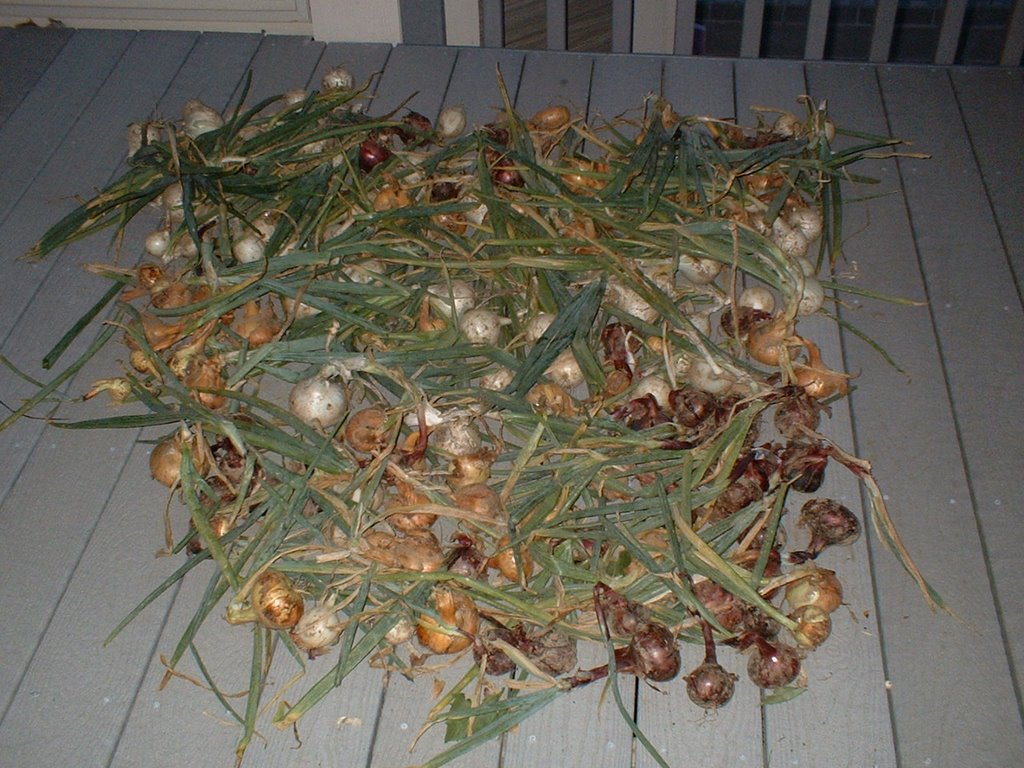
Onions!
I've picked most of the onions. Three went to seed before I could pick them (I'll harvest the seed and see what it does) A handful were soggy and rotting, those went into the compost bin. The remainder you see here on the deck, waiting to dry tomorrow in the sun. From the volume in the garden cart, I had about 4.5 bushels including greens. This is from 300 sets. Somewhere in there is a "White Lisbon Bunch Onion" grown from seed, but I mixed it in foolishly.
I may have to make a batch of French onion soup in the near future. Somewhere I have a freezer recipe for it.
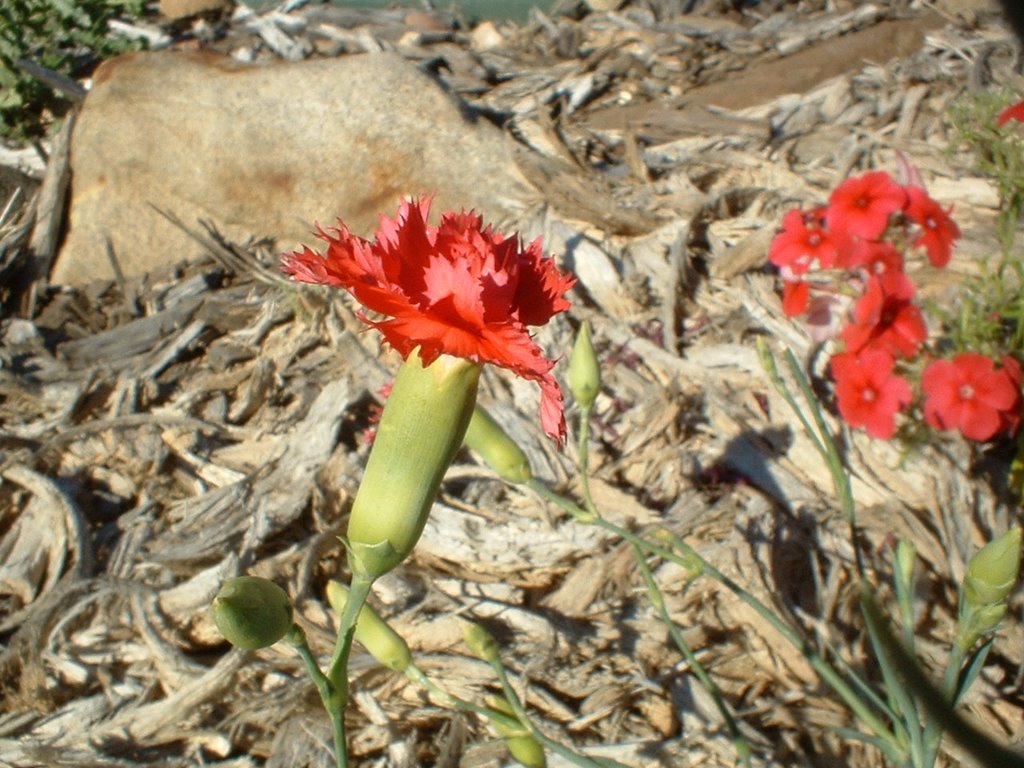 Carnation
Dianthus
I've got a few flowers on my carnations, they're growing well for the first year from seed. In the background you can see some phlox.
 Maltese Cross
Lychnis chalcedonica
An orange-red perennial flower for full sun. Attractive to bees and butterflies. This is the first blooms on mine started from seed this year. Supposedly one can save the seedheads and store seed to propagate, or divide a mature rootball. I really like the look of these delicate flowers amid my rudbeckia.

Two apples were picked for a trial of ripeness. They're still a bit underripe, but we're getting concerned about the branch being damaged from the weight.
The second apple tree didn't have any fruit. The third had tent caterpillars, and lost some branches.
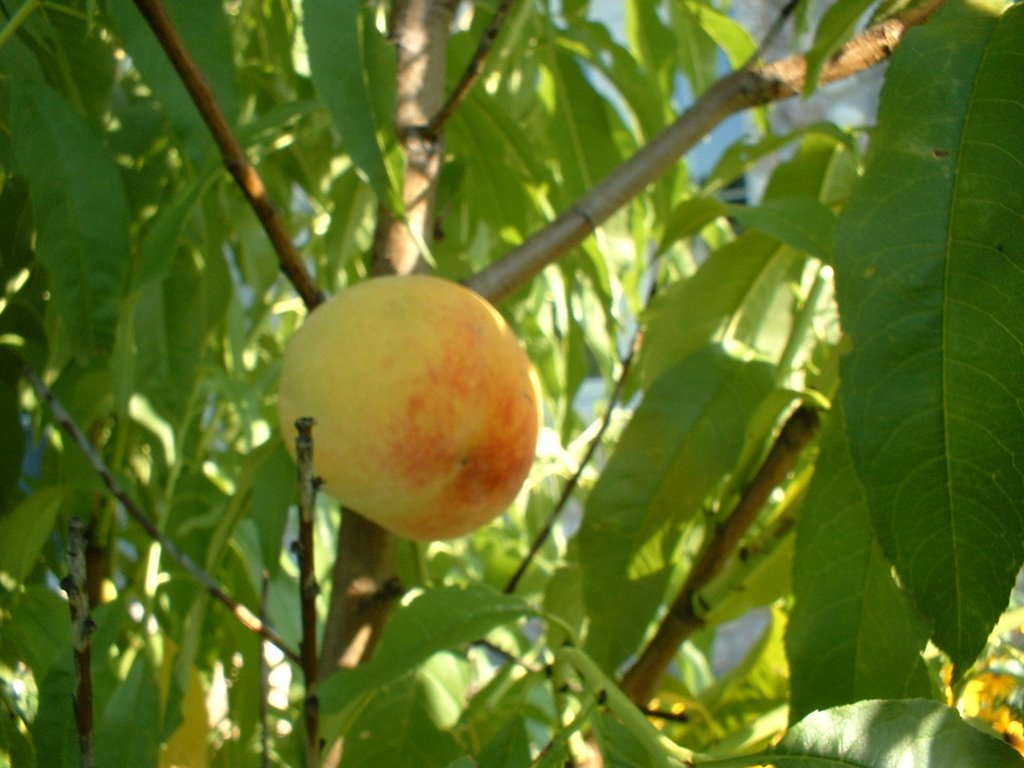
The peach has been picked and eaten. The skin was rather thick, but the size was very near to a small-ish store peach. It was a little over-ripe (you can see the blemish at the blossom end, the little dark spot is an ant-made hole) It was sweet and juicy. I look forward to more next year, but I'll definitely keep an eye out sooner so they don't become bug food!
Thursday, July 27
23 July
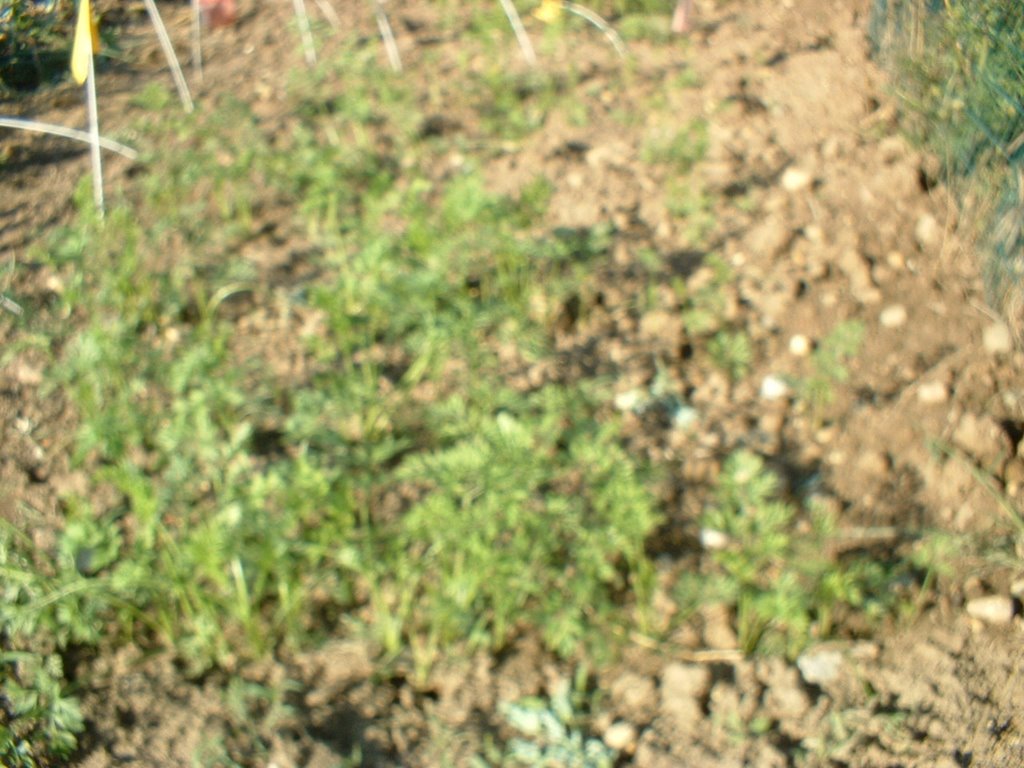 C'mon carrots....FOCUS! grr... some photo trouble with this, but it's my carrot patch & I have no other photos of it, so you're stuck with a blurry carrot-shot. Just squint a bit and you can see them, and maybe one of the celebrity babies hiding in there somewhere, too.
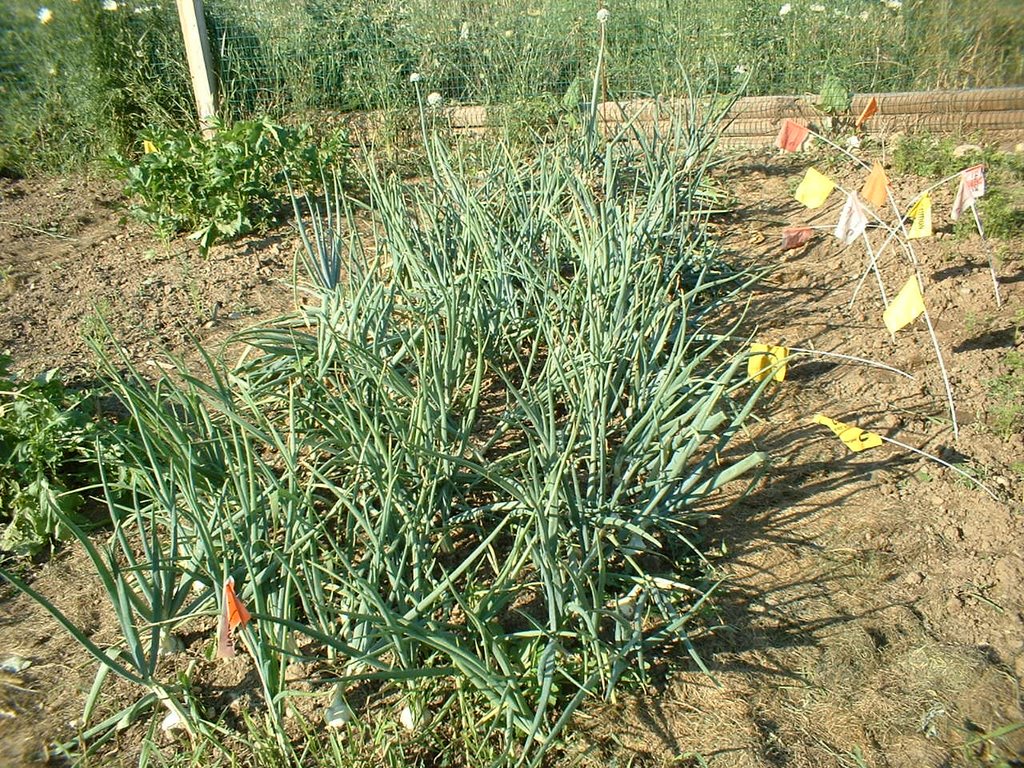 There will be no shortage of onions this year. Many of the bulbs are breaking the surface of the soil, I'll have to plant them deeper next year. Not bad for $3 worth of onion sets back in spring.
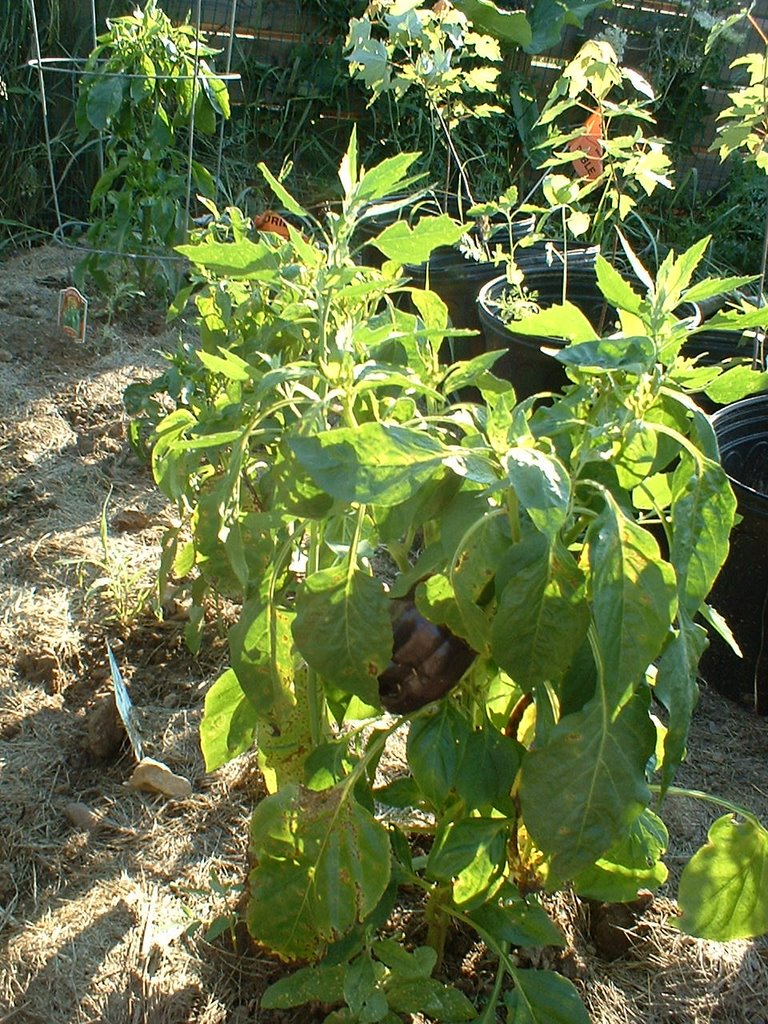 Purple peppers are the only fruiting pepper plants. I'm not entirely sure why, but the rest of the peppers seem to have gotten some shock being planted in the garden (maybe the store hadn't put them in direct sunlight?) These peppers will turn green in cooking, but make a really neat color addition to stir-frys (stays purple if you cook lightly), and salads.
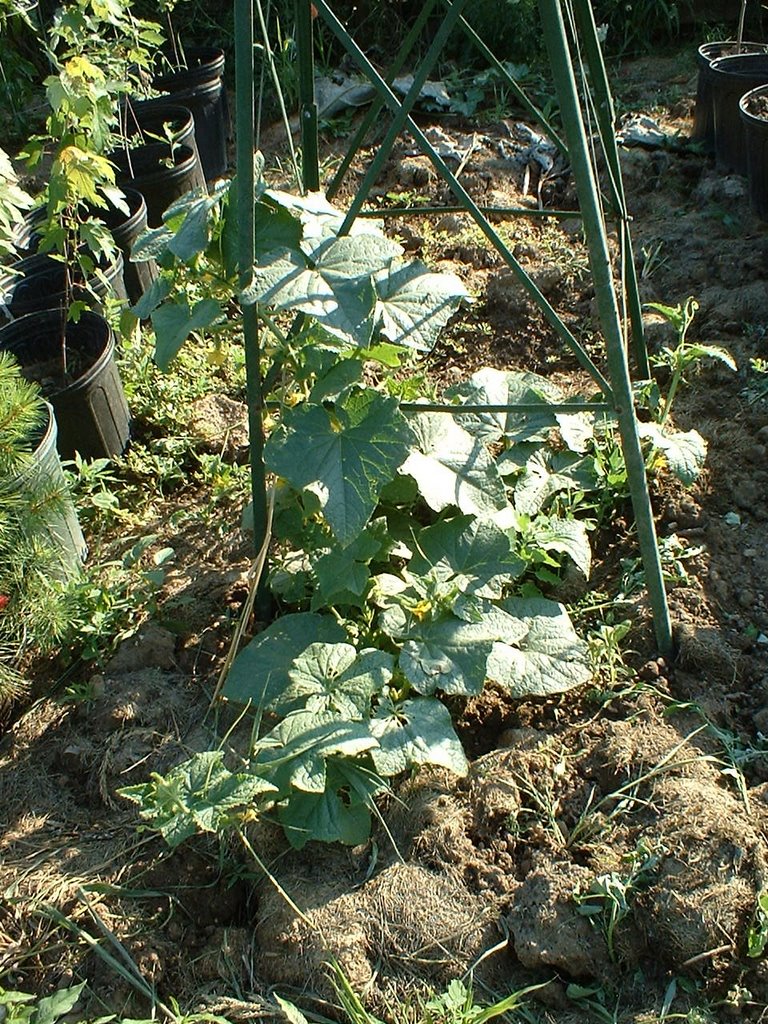 One of the cucumber plants is producing. The others seem to have died a slow and painful death. I don't see many flowers on this one, either, but it's still early. I should plant some dill in the open space beyond, for a nice cucumber-tomato salad next month.
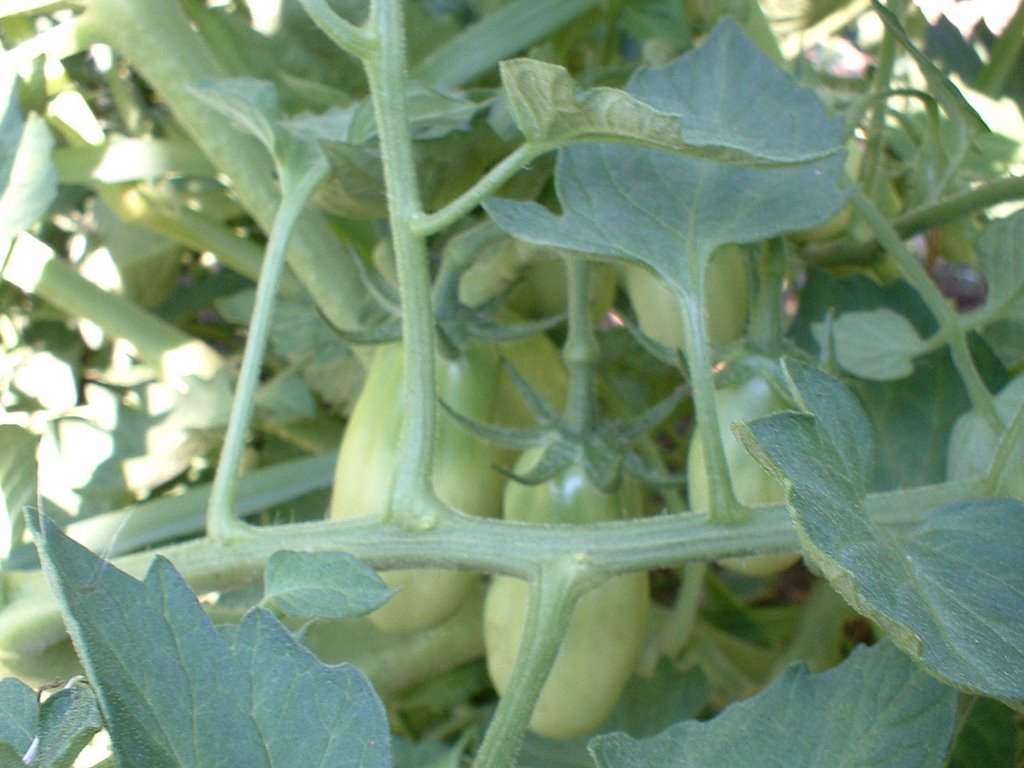 Green tomatoes abound. Even after the massive cutting I gave the tomato plants last week. I guess it really is true that they grow better if kept pruned a bit. These are San Marzano paste tomatoes, they grow about 1.5" diameter, and 3-4" long, have a thick meat, and a hollow center with little water. The pulp makes a fine tomato paste. I split the skins in boiling water, then quarter the tomatoes (picking out bad ones), and send them through the food mill. The pulp and juice spend several hours in a crock-pot to reduce to a nice sauce. I then freeze the sauce for winter. This year, I'm going to attempt canning the sauce / paste. We'll see how it goes.
 Beans are growing well, and starting to produce. I've picked a few dinners worth already, and they've only just begun to produce. The beans are very tender still, 3-4" long, and just barely formed within the shells. All the beans I have can be eaten green or dry, I try to save some each year as seed for the following year.
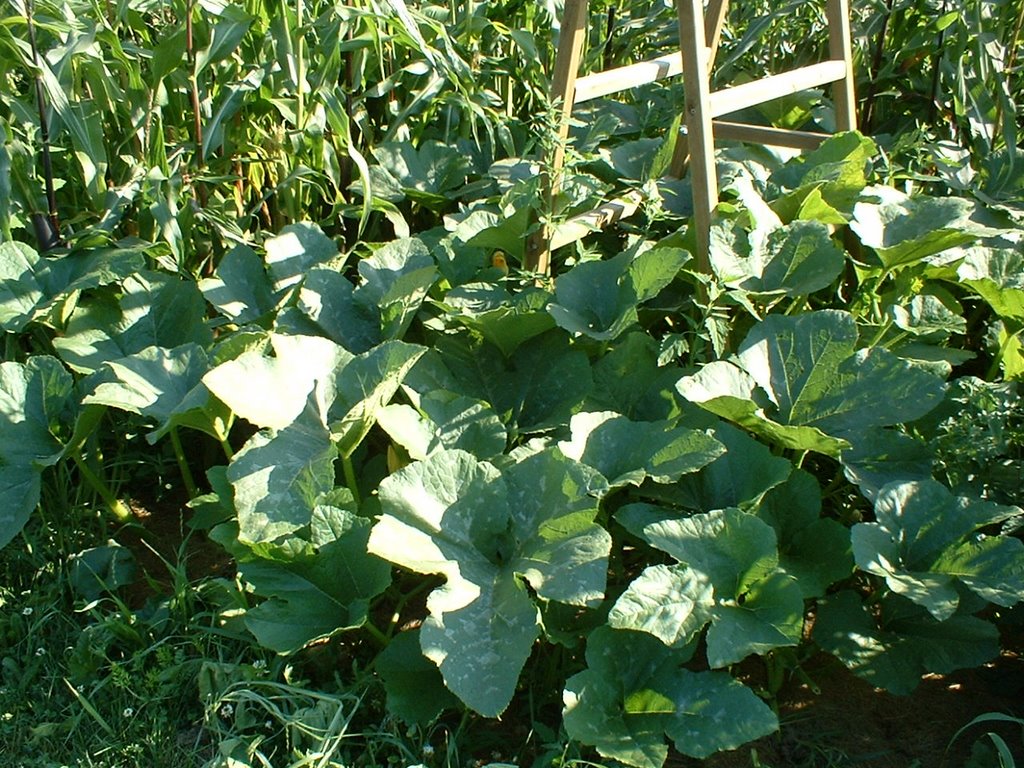 The pumpkins!
The vine is getting huge, taking over just about all the groundspace between the rows of corn. Someone told me growing squash, corn, and beans together was a Native American idea - called the "Three Sisters".
Wikipedia confirms the story, and adds the three are companion plants -the squash chokes out weeds, the beans fix nitrogen in the soil to fertilize, and thee corn provides structure for the beans.
I haven't added the beans to the mix, but pumpkins and corn seem to be symbiotic. It's worth a try next year.
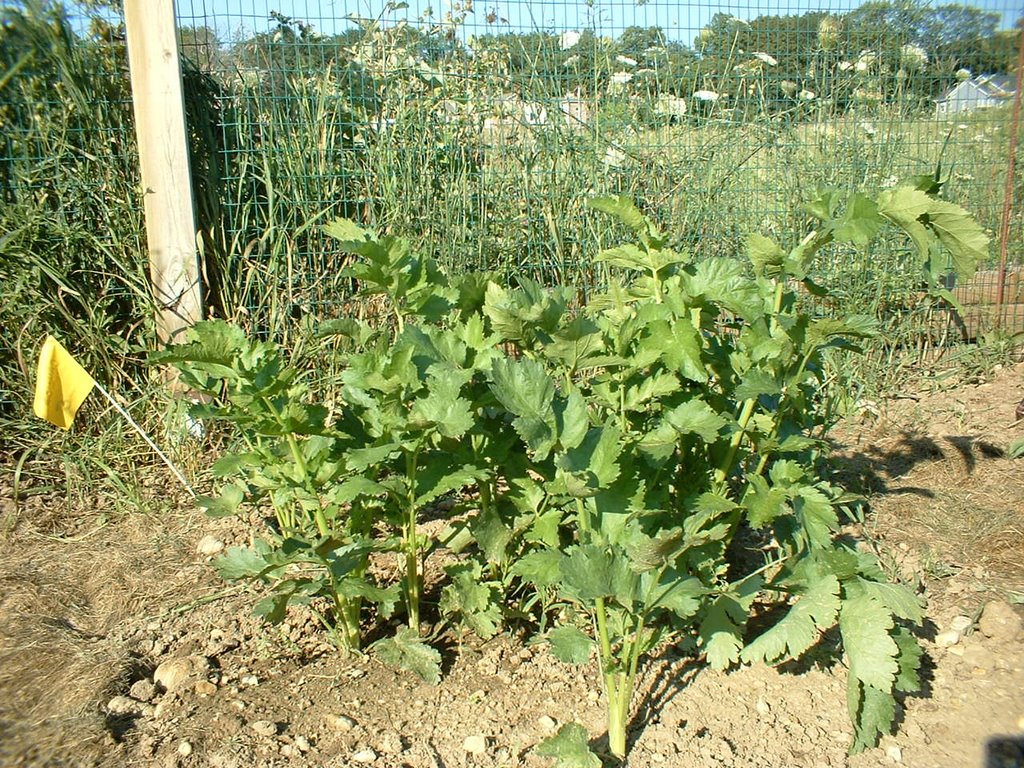
Parsnips are growing well. I've only gotten a few rows this year, they didn't germinate well from the old seed, but I'll have enough for stews and soups occasionally this winter. Come fall, after a hard frost, I'll mulch in the parsnips with a blanket of chipped leaves. Then, I'll mark their location with some flags, so I can find them in the snow to dig. Why bother storing them in the house when the garden does the job just as well?
--
Tuesday, July 4
4 July - Happy independence Day
 The front garden, with Black-Eyed Susans and Rudibeckia in full bloom. Also, the grasses and hydrangea aren't looking quite so sad anymore. By next year, the coneflower and daisies should fill-out some, and the whole area will look much better.
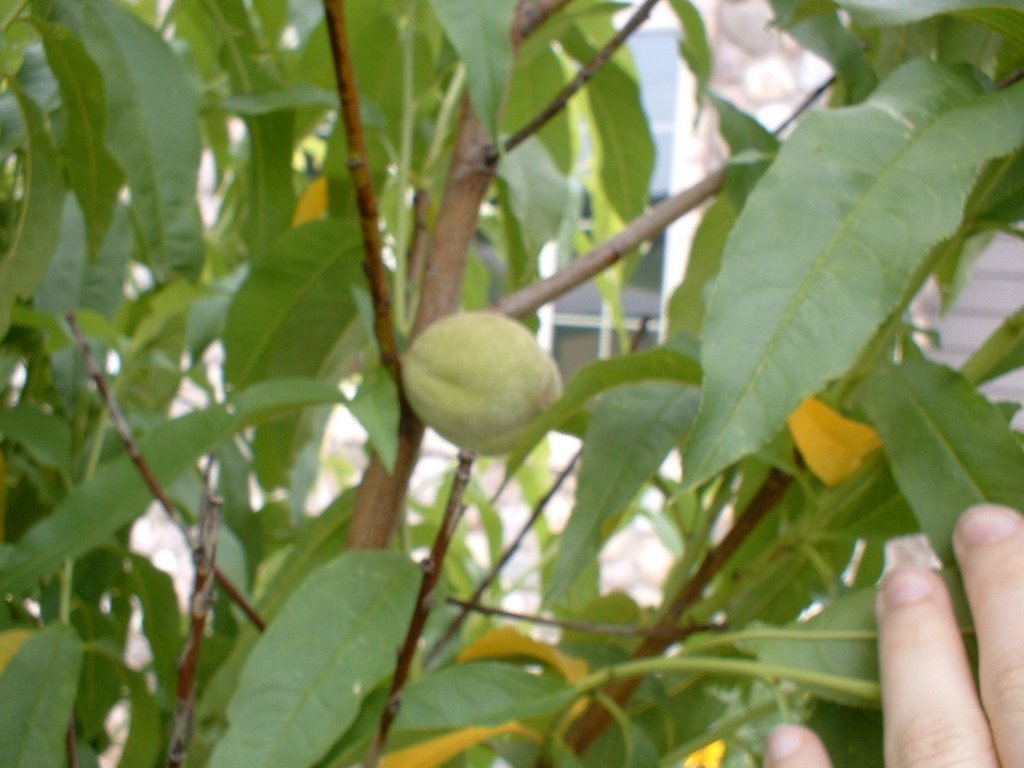 We have a Peach!
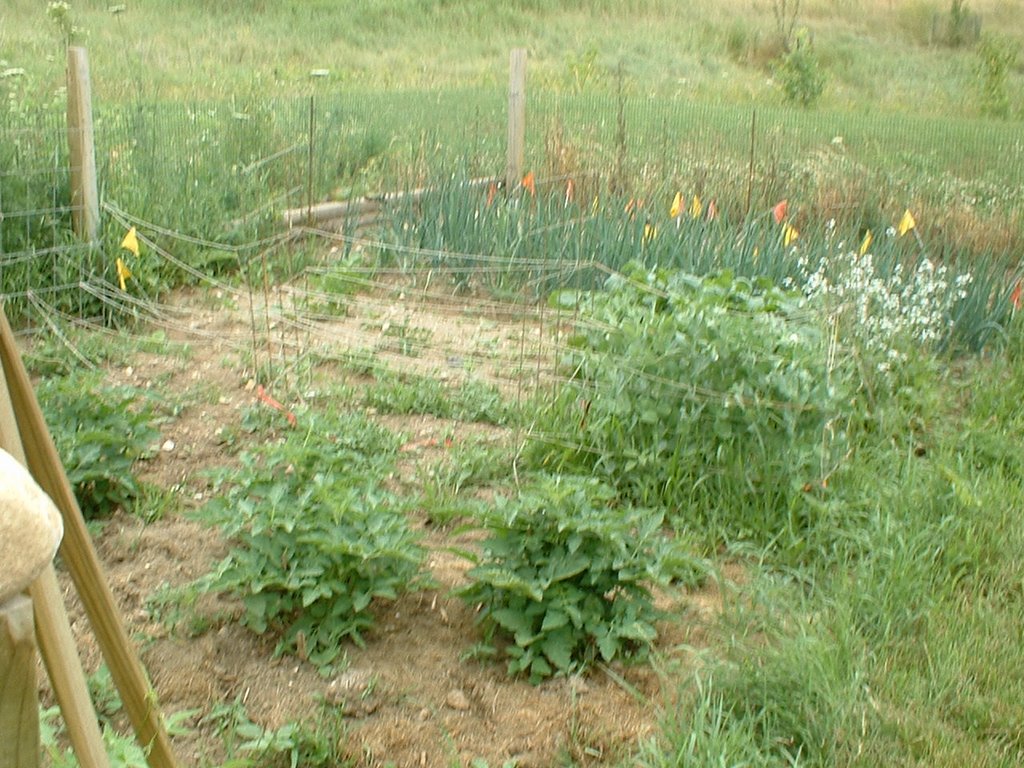 The tomatoes, first crop of peas, and onions can all be seen here. The mass of white flowers was the radish crop that went to seed (oops). I've since picked and composted the remaining radishes, let's hope I'm not picking them next year as well. In another week I should have the first snow peas (mine are a bit late this year), and turnips - to be boiled with a sour apple and served with brown sugar, very good!
 The potatoes have filled their bin to the top, and are looking healthy. These are Yukon Gold potatoes from the store that sprouted before I could eat them. The hope is to get enough to eat some, and mash & freeze some. The Yukon Gold don't need as much butter as a Russet does, they tend to have more flavor initially.
And the corn is knee-high by the 4th of July. It should be a good crop this year. It is "Painted Mountain" an open-pollinated variety of flour corn that has multicolored ears for fall decoration. I might get ambitious and try to grind the corn flour, but I'd need to borrow a grain mill. This corn is starchier than most, so I'm not sure how it would bake.

"These are MY Elderberry bushes... "
The dog usually makes a nest in the shade beneath the Elderberries. All the white blooms you see are the bushes, and this is only about 1/8th of all the bushes on the lot. In another six weeks, the birds will be going crazy gorging themselves on the berries, while I try to fight them off to pick a few quarts for jam (and a friend picks bushels for wine).
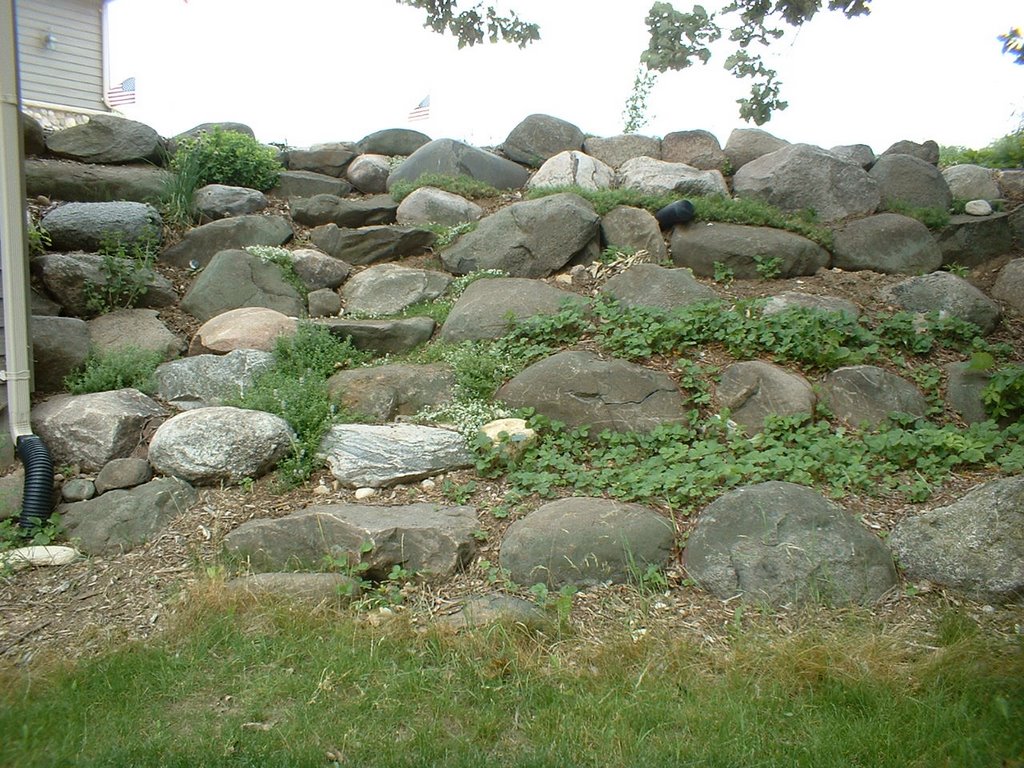 The rock wall is filling in - you can see all the strawberries on the right side of this photo. The creeping thyme along the staircase is also covering well. I seem to have gotten two varieties, a pink flowered one and a white flowered. The white is slightly smaller and lower-growing, so I'll try to encourage that style, but the pink would do well as a grass substitute elsewhere, maybe in the garden path?
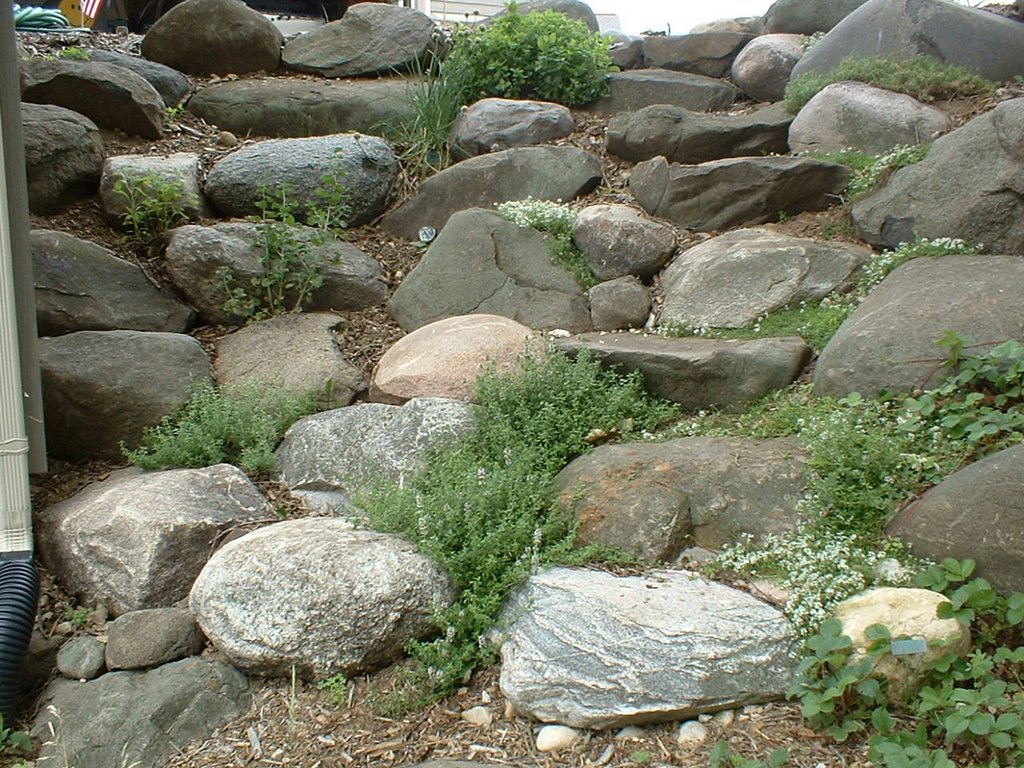 The herb garden side of the wall is also growing. The mint (center, top in the photo) is trying it's hardest to grow out of that container, I've given it a few good clippings to keep it cut back, but still it is going crazy. The sage, horehound, and oregano have all come back, and the chives never really left. I still need to get a pot of parsley well established and coming back each year.
Thursday, June 29
18 June - ok I've been busy
 Yeah, I forgot to post this page.
The black-eyed susans are just starting to bloom, as seen to the right. Quite lovely, and I might have enough to pick a bouquet on the 4th of July.

As you can see, the garden is nearly all planted, and most of the trellises are up.
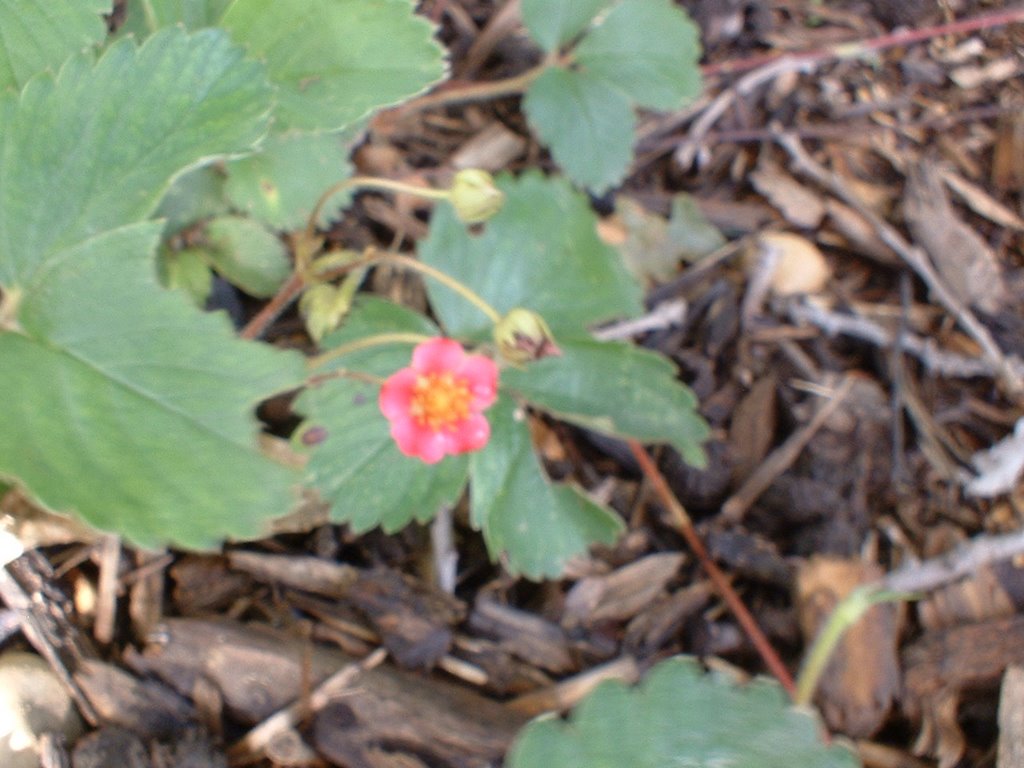
The strawberries are blooming, these brilliant pink flowers are "Lipstick" but they usually don't set fruit. I've also added some wild strawberries this year to the area, hopefully I'll get a handfull of those teeny berries.
Monday, May 29
29 May - Memorial Day weekend
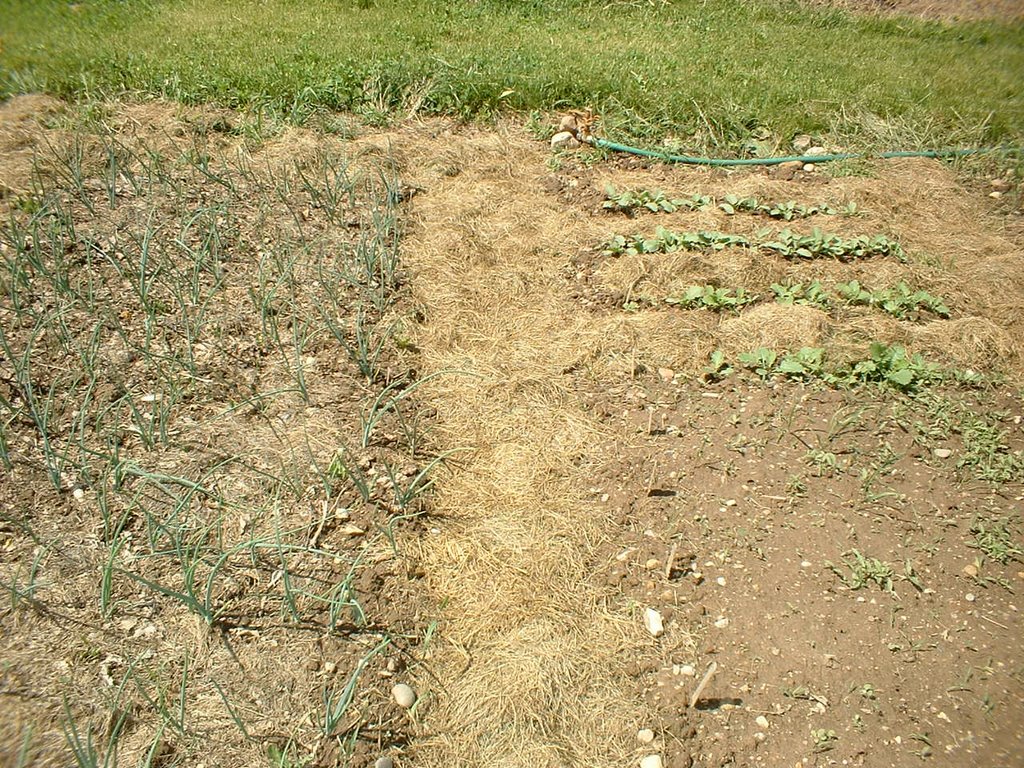 Onions (left) and root crops (right) are growing very well with all the rain we've had. The radishes are closest to the grassy path, should be ready to pick in another week or two. The turnips will be picked twice, a small crop at golfball size to give room for the rest, then the remainder of full-sized roots. The last couple days have been 90-degrees plus, so the sprinkler saved these guys from some wilt. Thankfully, the next week should stay below 80.
Beans have sprouted!

 And Tomatoes have been planted (this is one of 18 plants!). If all goes well, a friend and I will attempt to can tomatoes this year. The home-made tomato sauce is well worth the trouble of making it, and doesn't taste anything close to that coming from a grocery store can.
The pole bean teepee. This is for short beans, 4 ft tall only, and is very simple to make.
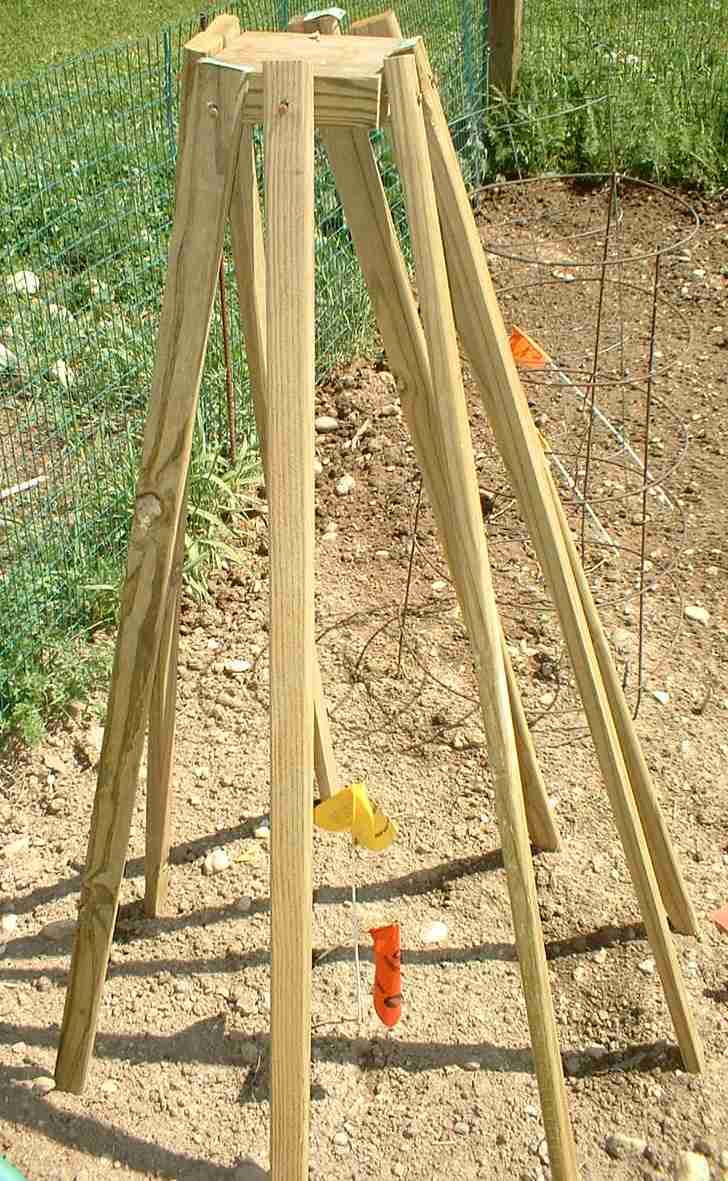
Materials - misc. end of 2" x 4" or other board (I used a 2x6), and four 1"x2"x8'.
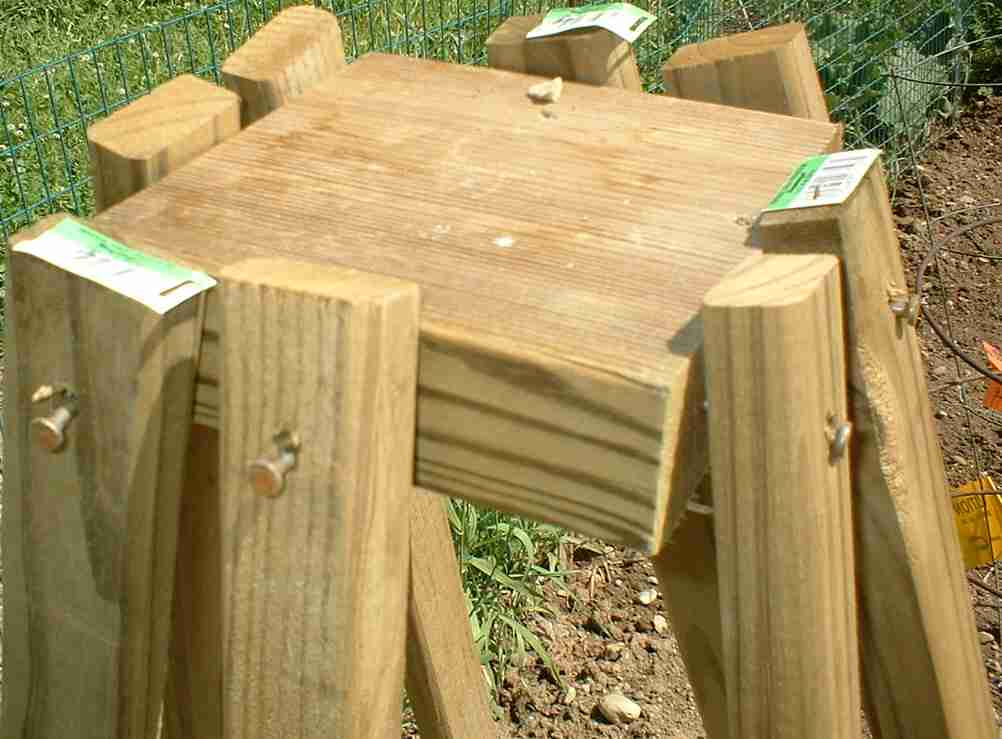
Cut the 1x2's in half, and drill a hole in the end of each, about 1" from the edge. Use nails to attach the 1x2's to the scrap of board, leaving enough room for them to rotate. The poles can pivot and collapse for storage. I sunk the teepee about 2" into the ground to help support it in the heavy winds we have here.
A close-up of the top of the teepee, showing how the posts are staggered around the board .
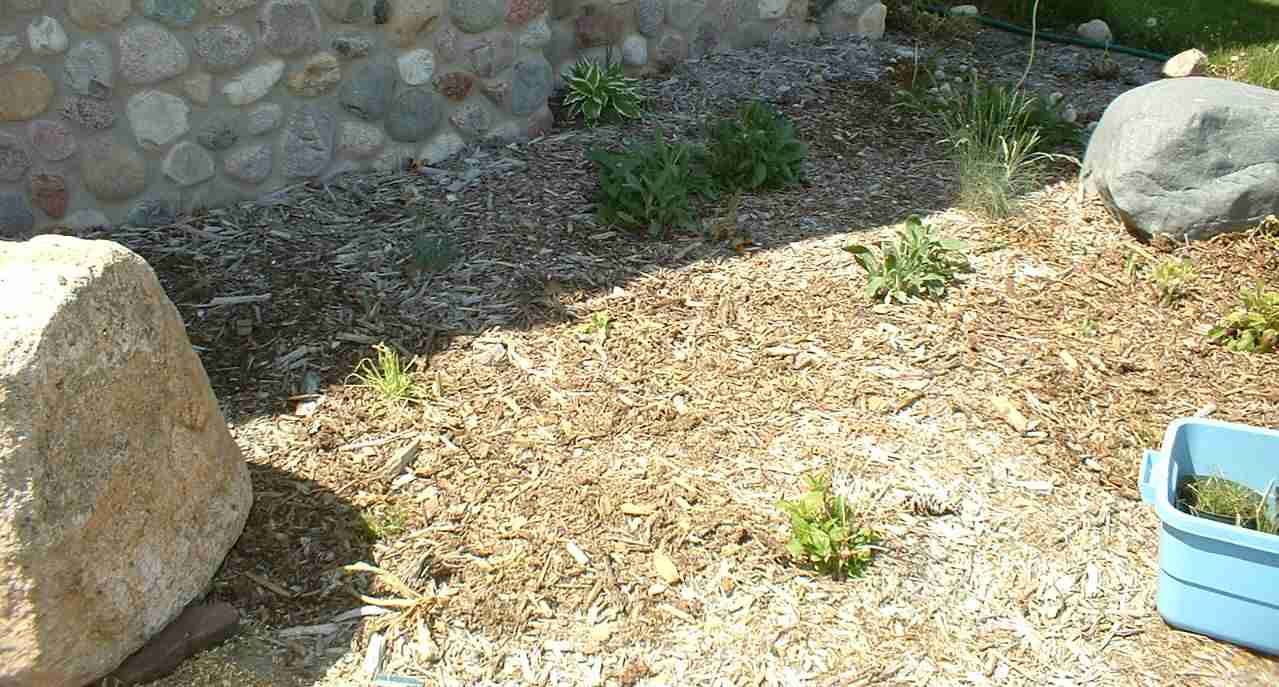
Here is the start of the new front bed, you can see the various grasses as well as daisies, coneflower, and black-eyed susan. Not much to look at now, but eventually the plants will grow into their bed and have a little more to show off. The hydrangea is front and center, and the peach tree is just out of the photo to the right.
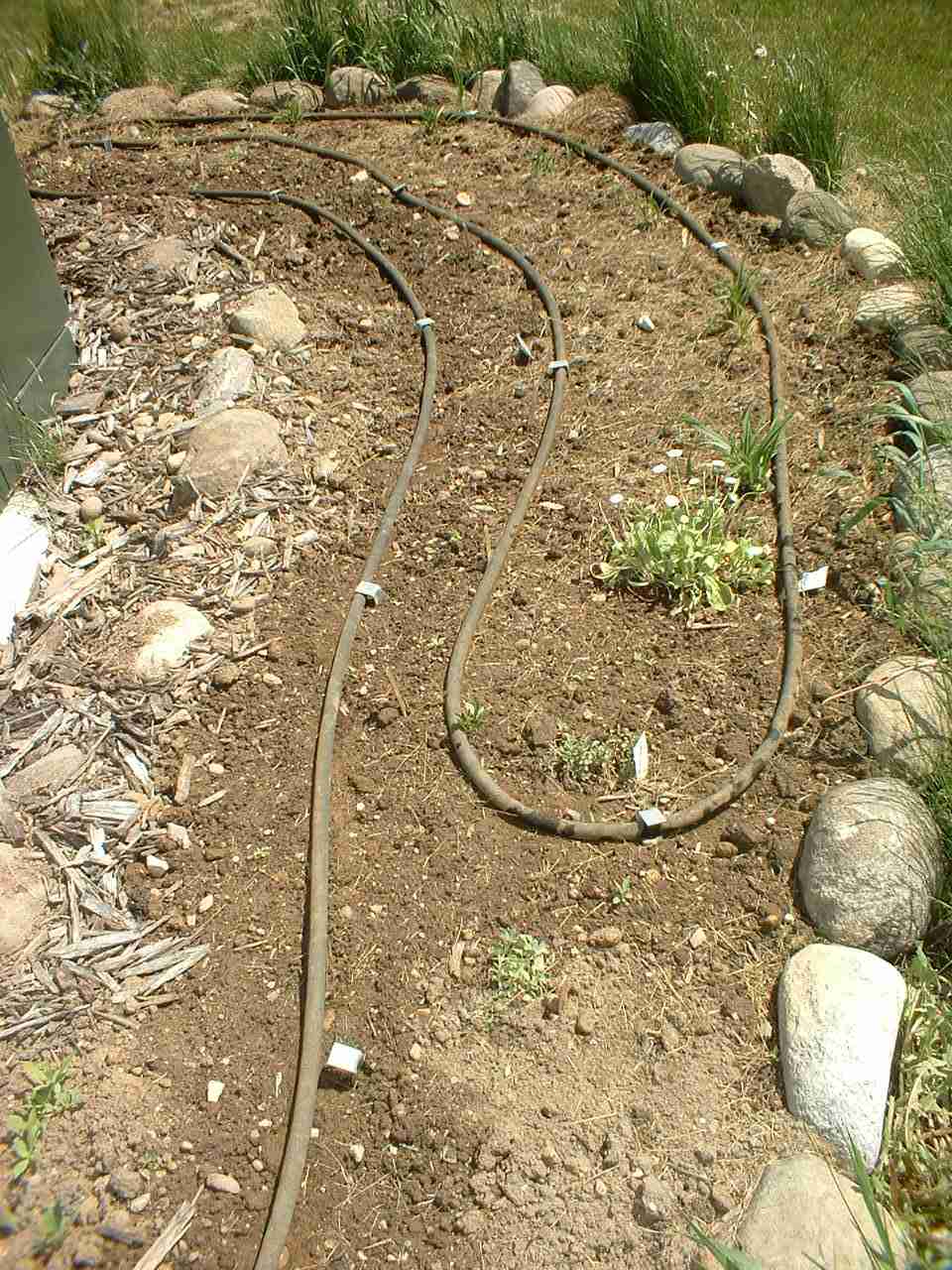 Here's the electrical box bed that I've nearly completed planting. The daylilies are along the outer edge of the bed, as well as a pompom daisy (a gift), and some rock cress. Along the inner (left) edge are columbine of several varieties. I expect this bed to take a few years to have a real show. Now, if I can just kill off the rest of the weeds...
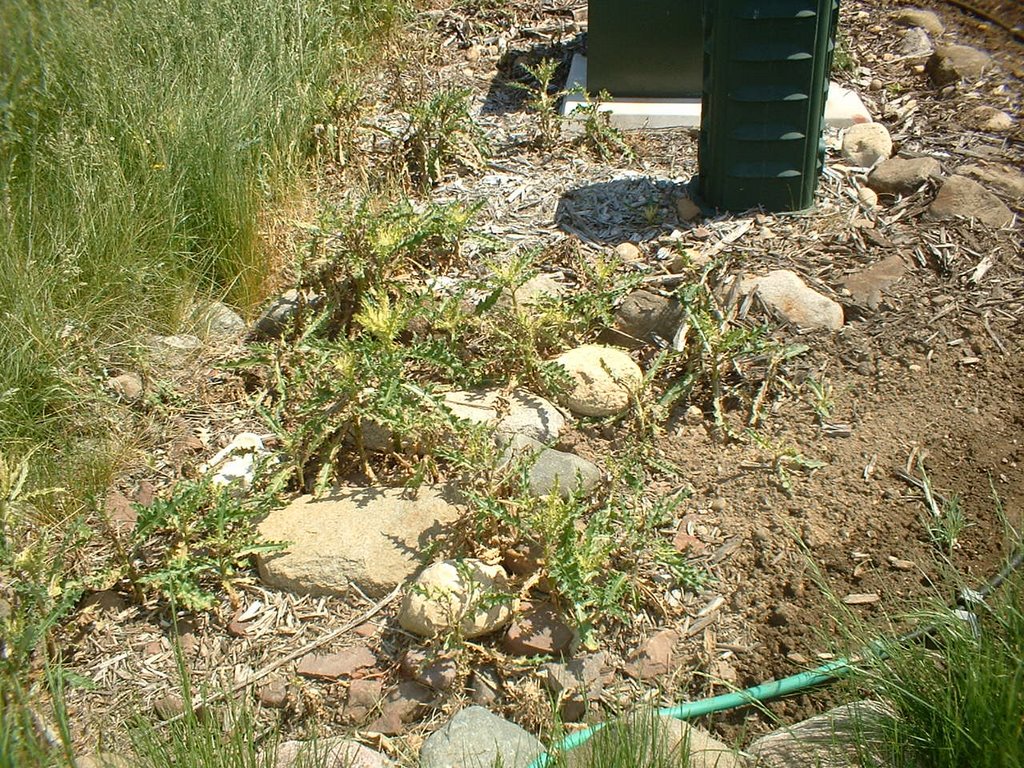
The eyesore - some thistles that have survived the first roundup treatment.
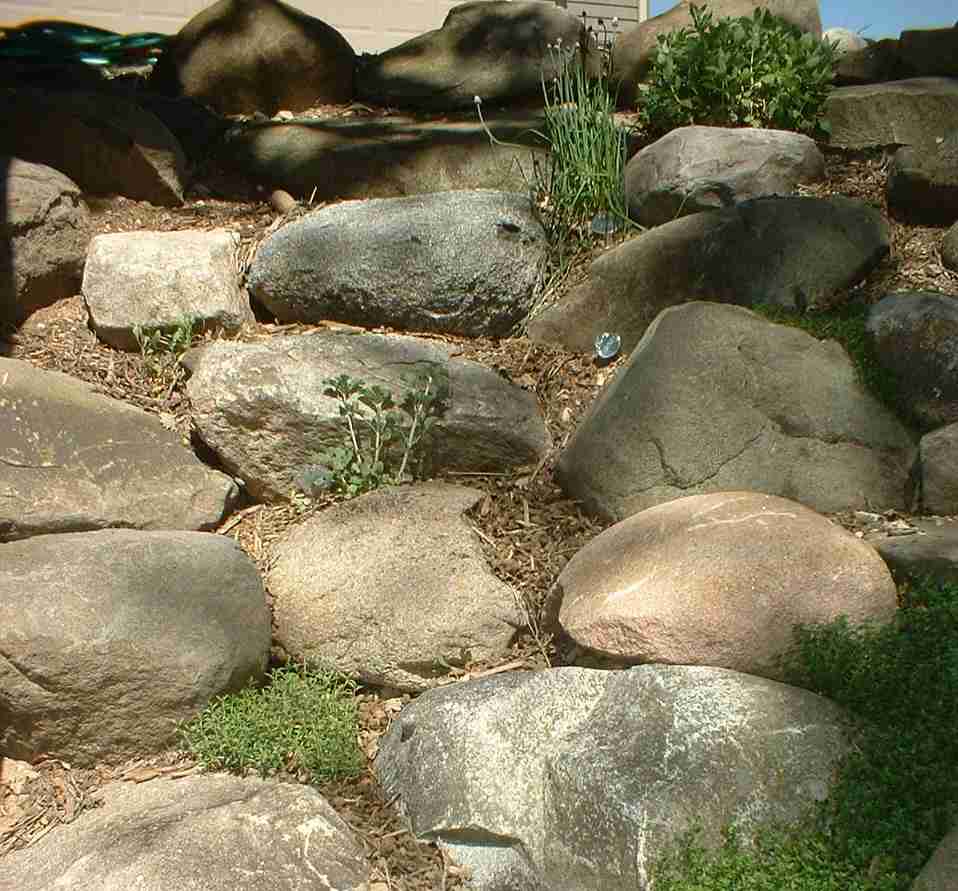 The herb garden in the rock wall is doing very well. Clockwise, from the top, center are Chives, Mint (in a pot set into the ground), creeping Thyme, Oregano, Horehound, and Sage. The Basil and misc. varieties of mints are still too small to be transplanted.
The whole wall is doing well, and I expect to put some of the creeping thyme in other spots, such as the weed patch above!
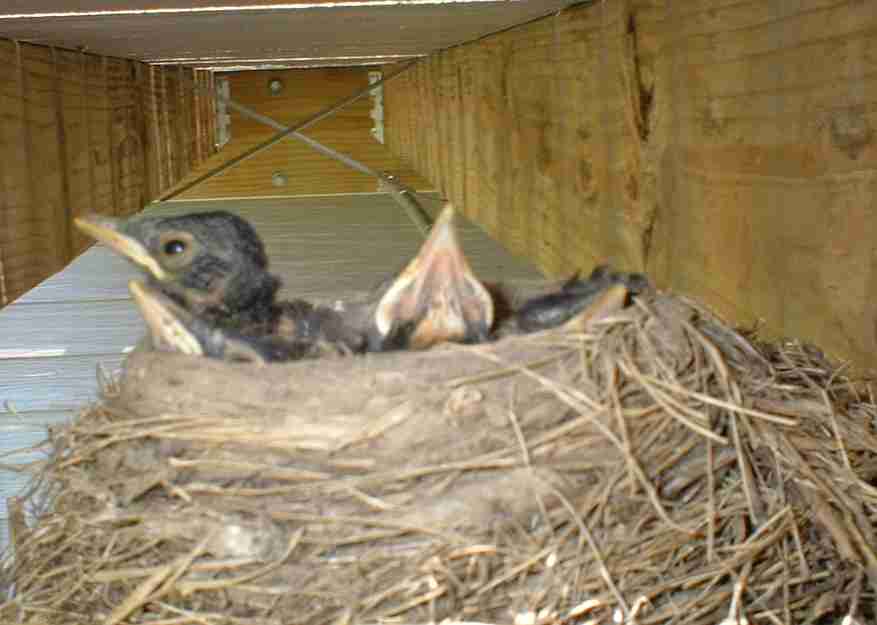 So these are the little twerps waking me up with the sunrise! A nest of robins just below my bedroom window.
Sunday, May 21
21 May - what a month it's been!
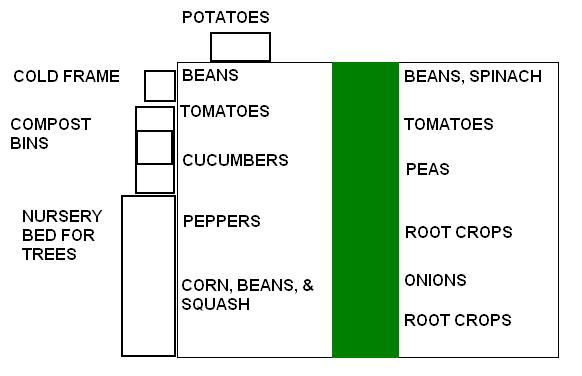
Two weeks of rain, followed by three gorgeous sunny days (Friday, Saturday, Today). Now that it's dried up a bit, I can resume prepping the garden beds. My garden is divided into halves with a strip of grass between the two for the garden tractor to drive upon. Each half is then divided into about 6 beds, each 4' wide, with a 1' walkway between. This arrangement seems to work well, with enough space for plants, but not so much that I cannot reach across for weeding or harvesting. When I plant corn, I tend to do a double-wide bed, or just plant two next to each other, to get the blocking effect.
The entire East half of the garden has been prepped (tilled, double-dug, beds & paths formed, and paths covered in grass clippings) The onions, roots, spinach and beans are planted. As is one section of peas (Oregon Sugar pod, they grow well, and I end up with peas all summer). The West half of the garden has been tilled and sprayed with a herbicide, to reduce the weeds before I dig. This week I'll be starting on the bed for the corn.
The potato bin (I'll post a photo if it sometime soon) is a box with one removable side, similar to a compost bin. I added 4 inches of soil, and planted the potato runts I've saved from the grocery store bag 'o taters, they're Yukon Gold variety. One of the books I read suggested adding more soil to the potatoes so they grow 'up' instead of down, making it easier to harvest. That, and the removable side to the potato bin, should help - I hope to not have to dig potatoes out of the hard clay!
The front area by the electrical box has been partially planted. Besides the lilies, I've added Columbine, Blazing Star, Soapwort, Rock Cress, and Carnations. My Coleus all perished in a cold snap when I left them out while I went away for the weekend. (bad gardener!)
The other front area, with the peach tree, has been started. I have three big rocks, a hydrangea, a couple hostas, and a flagpole. I recently planted daises, Black-eyed Susans, Echinacea, Maltese Cross, Pampas grass, Blue Fescue, and Woodrush. It's going to be a bit busy, but the idea was an unstructured garden with multi-season attraction.
The rock garden is recovering nicely, with several herbs well established. The strawberries are looking prolific, and I might have to add netting to keep the ground squirrels from them. We'll see what I can get. Amazingly, most of the plants are adapting well to the morning/evening sun, with deep shade during the heat of the day. I hadn't expected everything to be so hardy.
--
Subscribe to:
Posts (Atom)
